
Origin - Ancient Star Map: Kitora Tomb, Asuka circa 65BC


Ancient star chart from Kitora Tomb, Asuka 65BC, depicting sky from seen from China, from locations such as modern-day Xi'an and Luoyang with recognisable star patterns
Source: http://www.asuka-park.go.jp/kitora/
Note: The star map shows clear celestial patterns not seen in older star maps eg. 17,000 year old Lascaux cave paintings show
Pleiades, Taurus, Orion and AldebaranNote: The star map shows clear celestial patterns not seen in older star maps eg. 17,000 year old Lascaux cave paintings show
It has designations for the horizon, equator and ecliptic circles, as well as recognisable patterns of stars.
Tag :
origin
Earth Moon System

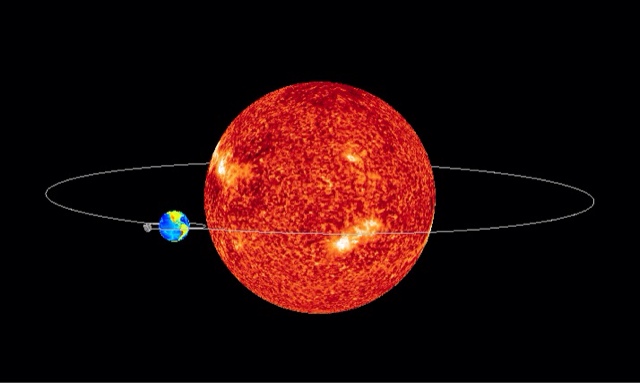
The Earth, Moon and Sun relationship contain some interesting numbers, ratios and occurrences (that suggest a highly ordered and rearranged system). In particular the numbers 366, 273, 400 and 100. Eg. the Earth is 3.66 times larger than the moon and the Sun 400 times larger.
The E.M.S relationship is as follows:
- Moon = 273
- Earth = 366
- Sun = 40, 000
366 EArth
The Earth appears to have an association with the number 366
- 36.6 °C = Average human body temperature
- 366 days (Phaitos disc calender *)
- 366 Lunar days
- The Earth turns 366 times, each orbit of the Sun
- Earth/Moon diameter = 3.66
- 366/Speed of Light ≈ 100km/ms **
- 11/3 = 3.666
- Reciprocal: Earth has 10 000 days to 366 lunar days
* the Phaitos Disc contains on the front 30 divisions/31 divisions on the back - which flips every 40 years
**c, speed of light = 292, 792, 458 m/s2
------------------------------------------------------------------------------------
273 MOON
The MOON appears to have a 273 correlation
Sun circumference: 2730 000milesSun acceleration: 273 m/s2
400Moon = 27.3% Earths Size (1/4th)Moon acceleration: 273 cm/s2Moon orbits Earth and turns on it's axis every 27.3 earth days
- 273 days in human pregnancy
- 27.3 days in menstrual cycle
- 273.2 °C = absolute zero
- 273K = absolute phase change (water)
- 1/273 per °C = expansions eduction of gas
- Square the circle: a circles: square diameter is 27.3% longer
- Inscribing a circle within a square: the four corners make up 27.3% of total area
- The moon is a 1/40th scale model of the Sun
- The moon is 400x from the Sun (relative to Earth)
- Sun/Moon diameter = 400.2923
100
- Earth's orbit = 1/10,000th the speed of light, c
- Light travels across Earths disc in 1000 seconds
60 (sexagesimal Sumerian origin)
Ratios
 Posted with Blogsy
Tag :
273
Pluto and Charon
PLUTO & CHARON
Updated: July 18th 2015
Plutos Mysterious Icy Region
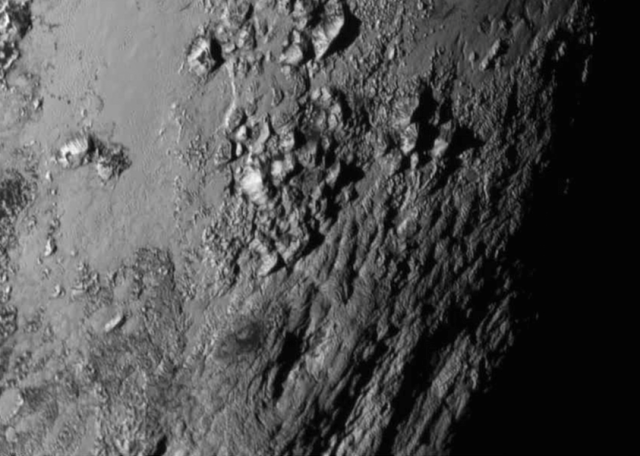
Pluto contains a mysterious range of 11,000-foot mountains composed of frozen water ice, but its surface and the surface of its largest moon, Charon, are surprisingly devoid of large impact craters. This indicates to scientists that both bodies could be geologically active.
As Pluto and Charon are tidally locked, this implies there is an inadequate heat exchange mechanism to explain such geological features. Thus Pluto may be quite young, est 100 million years old, geologically active or have another unknown source of such featureless plains
Meanwhile, New Horizons also imaged the smaller moons of Nix, Hydra, Styx, and Kerberos

Pluto has some amazing geographical and planetary features
- Geologically, appears powered by unknown mystery source. Due to the fact no impact craters are seen, it must be geologically active or fairly young eg 100 million years old
- Nitrogen atmosphere
- Contains a Plasma tail (similar to Venus and Mars) showing solar wind interaction and atmospheric loss rate
Mystery Energy Source
July 18th 2015 update
"They have surface areas that have no craters. There must be craters [from meteorite impacts] unless they are young. We also see fault lines, scarps [cliffs] and other tectonic features such as rift valleys on both Pluto and Charon. It is unmistakable.""Where does the energy come from? We don't know. We have theories. We flew by Pluto on Tuesday [14 July]. We made the discovery on Thursday and now it's Saturday. We just don't know and we cannot formulate theories that fast."Pluto is covered in a deep layer of water ice which, frozen by the planet's -230C surface temperature, behaves like rock.Source: The Sunday Times
The Heart Of Pluto (Tombaugh Regio)

Within this icy region, lies a vast, craterless plain that appears to be no more than 100 million years old. North of this region lies the Sputnik Planum (sputnik plain). Below is a simulated flyover showing the icy details and new wonders
17th Jul 2015
This simulated flyover of Pluto’s Norgay Montes (Norgay Mountains) and Sputnik Planum (Sputnik Plain) was created from New Horizons closest-approach images. Norgay Montes have been informally named for Tenzing Norgay, one of the first two humans to reach the summit of Mount Everest. Sputnik Planum is informally named for Earth’s first artificial satellite. The images were acquired by the Long Range Reconnaissance Imager (LORRI) on July 14 from a distance of 48,000 miles (77,000 kilometers)
PLUTO NITROGEN ATMOSPHERE & PLASMA TAIL
14th July 2015
Cold, Dense Region of Atmospheric Ions Behind Pluto
the Solar Wind Around Pluto (SWAP) instrument observed a cavity in the solar wind — the outflow of electrically charged particles from the Sun — between 48,000 miles (77,000 km) and 68,000 miles (109,000 km) downstream of Pluto. SWAP data revealed this cavity to be populated with nitrogen ions forming a “plasma tail” of undetermined structure and length extending behind the planetSource: JHUAPL
CHARONs Mysterious Depressed Mountain

A newly released Charon photo, which was taken by NASA's New Horizons probe during its epic Pluto flyby Tuesday (July 14), reveals a mountain rising out of a big hole on the 750-mile-wide (1,200 kilometers) moon's surface.
The feature, which is visible at the upper left-hand corner of the inset, is "a large mountain sitting in a moat," Jeff Moore, of NASA’s Ames Research Center in Moffett Field, California, said in a statement.
Tag :
space
Development of Enchanted Objects

Convergence, the great technological design mantra and the worship of glass slabs of data may not necessarily be the intuitive everyday seamless magical experience for a connected Internet of Things for everyday objects.
More apps and interfaces do not help enhance our everyday experience. Instead, a deluge of data, emails, spam, newsflashes, weather reports ..they all could be displayed in a subtle persuasive technology, instead of a pervasive ever present spam of information.
“It took some time for me to understand why the smartphone, while convenient and useful for some tasks, is a dead end as the human-computer interface,” Rose writes in Enchanted Objects. “The reason, once I saw it, is blindingly obvious: it has little respect for humanity.”
“The big interface change enabled by these purpose-built, bespoke things is they can be so much simpler. They don’t have to do as much. I’ve always been drawn to human-computer interaction and interface design, making objects and services that interact in ways people feel are natural and intuitive.”
“The Apple Watch suffers from trying to do much,” Rose says. “The idea of an enchanted object really starts with something that’s ordinary. You start with something that’s familiar, and you’re adding a new sensor or display or feature.”
The indispensable parts that come next include simplicity and a sense of delight.
Source: IOT and Enchanted Objects
The indispensable parts that come next include simplicity and a sense of delight.
Source: IOT and Enchanted Objects
Tag :
IOT


